
Single Post
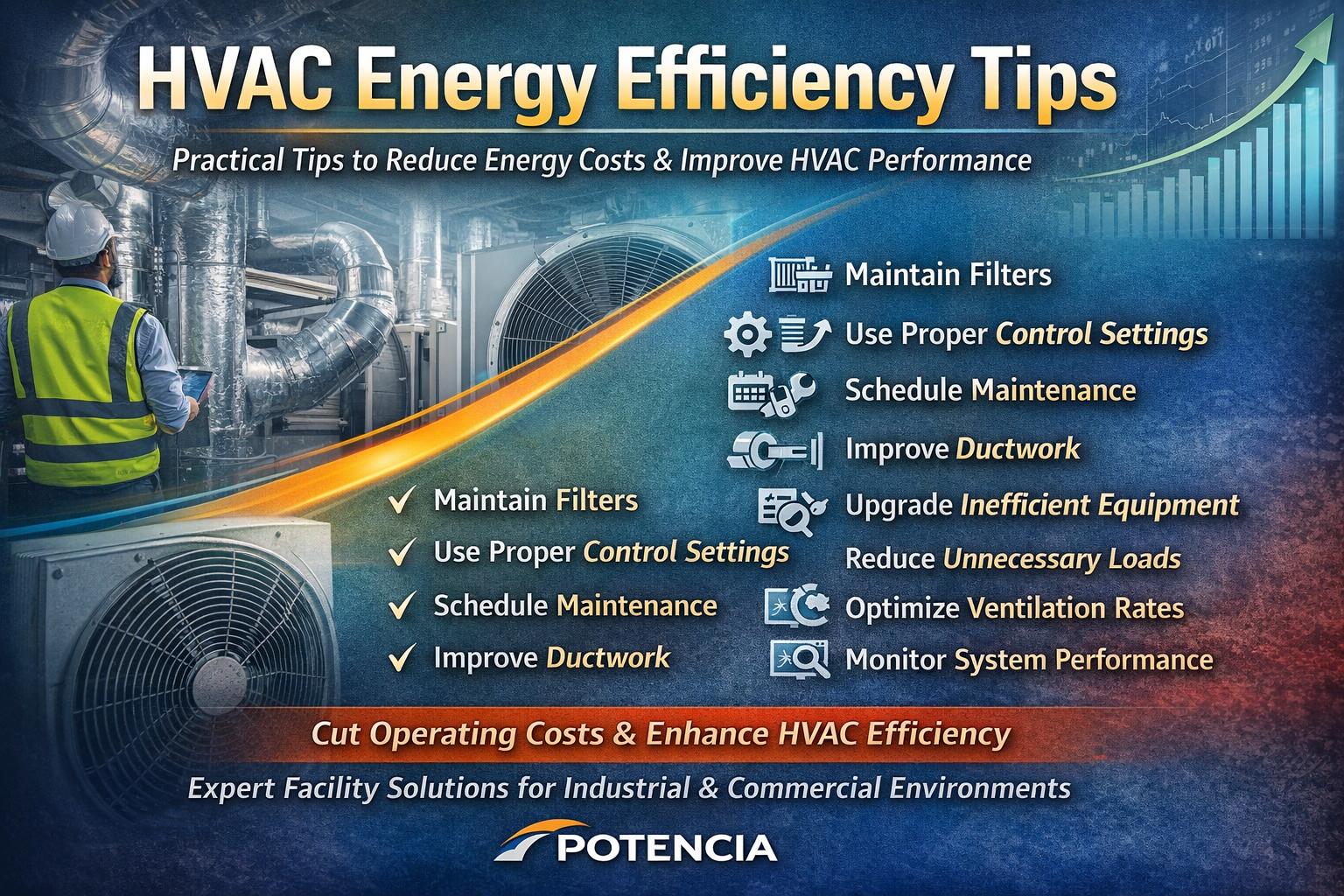
Practical Ways to Improve HVAC Performance and Reduce Energy Waste
Heating, ventilation, and air conditioning systems are among the largest energy consumers in commercial, industrial, and mixed-use facilities. When HVAC systems are not properly designed, maintained, or operated, they can drive up utility costs, reduce equipment lifespan, and create inconsistent indoor comfort.
Improving HVAC energy efficiency is not only about lowering electricity bills. It is also about achieving better system reliability, more stable indoor conditions, and stronger overall operational performance.
At Potencia, we help clients evaluate and improve building systems with practical, engineering-focused solutions that support efficiency, performance, and long-term value.
Why HVAC Energy Efficiency Matters
An inefficient HVAC system can affect far more than monthly operating costs. It can also create strain on equipment, increase maintenance requirements, and reduce environmental performance.
Better HVAC efficiency can help achieve:
- Lower energy consumption
- Reduced operating costs
- Improved indoor comfort
- Longer equipment service life
- Better airflow and temperature balance
- Stronger support for sustainability goals
- More reliable day-to-day system performance
1. Maintain Filters and Airflow Paths
Dirty filters are one of the most common causes of HVAC inefficiency. When filters become clogged, airflow drops and the system has to work harder to deliver the required performance.
Good practice includes:
- Replacing or cleaning filters on schedule
- Checking return and supply air paths
- Ensuring diffusers and grilles are not blocked
- Verifying that duct systems remain clean and unobstructed
Even small airflow restrictions can lead to major efficiency losses over time.
2. Use Proper Thermostat and Control Settings
Poor control strategies often waste significant energy. HVAC systems should operate according to actual occupancy, usage hours, and environmental demand rather than running unnecessarily at full capacity.
Helpful steps include:
- Setting realistic temperature ranges
- Using programmable schedules
- Reducing after-hours operation
- Reviewing zone-based control logic
- Avoiding excessive cooling or heating setpoints
Smarter controls often provide one of the fastest efficiency improvements with limited disruption.
3. Schedule Preventive Maintenance
Regular maintenance is essential for both efficiency and equipment health. Systems that are neglected often consume more energy while delivering worse performance.
Preventive maintenance should include:
- Coil cleaning
- Fan and motor inspection
- Refrigerant checks
- Belt inspection and adjustment
- Calibration of thermostats and sensors
- Verification of electrical connections and control panels
Routine maintenance helps identify small issues before they become major failures or long-term energy drains.
4. Improve Ductwork and Air Distribution
Leaking ducts, poor insulation, and unbalanced air distribution can waste a large amount of conditioned air before it ever reaches the occupied space.
Important efficiency measures include:
- Checking for duct leakage
- Insulating ductwork where needed
- Balancing air distribution
- Reviewing static pressure and fan performance
- Correcting poorly designed or overloaded branches
A well-balanced air system improves both efficiency and occupant comfort.
5. Upgrade Inefficient Equipment
Older HVAC units often operate at much lower efficiency levels compared to newer systems. In some cases, the cost of keeping outdated equipment running may be higher than the long-term value of replacement.
Upgrade opportunities may include:
- High-efficiency chillers or package units
- Variable speed drives for fans and pumps
- Energy-efficient motors
- Modern control panels and automation systems
- Improved ventilation recovery solutions
Equipment replacement should always be based on technical assessment, load requirements, and lifecycle cost considerations.
6. Reduce Unnecessary Cooling and Heating Loads
HVAC efficiency also depends on the building itself. If the building envelope, internal loads, or operational habits are inefficient, the HVAC system will always work harder than necessary.
Ways to reduce demand include:
- Improving insulation
- Reducing air leakage
- Managing solar heat gain
- Using shading where appropriate
- Reviewing lighting and equipment heat loads
- Minimizing door opening losses in conditioned areas
Reducing load at the source is often one of the smartest ways to improve system efficiency.
7. Optimize Ventilation Rates
Ventilation is essential for indoor air quality, but over-ventilation can increase energy use unnecessarily. Systems should be reviewed to ensure that ventilation rates match actual code requirements and operational needs.
This may involve:
- Checking fresh air settings
- Reviewing damper operation
- Confirming sensor accuracy
- Evaluating occupancy-based ventilation strategies
The goal is to maintain healthy indoor conditions without creating avoidable energy waste.
8. Monitor System Performance Regularly
You cannot improve what you do not measure. Monitoring HVAC performance over time helps identify inefficiencies early and supports better operational decisions.
Useful indicators include:
- Energy consumption trends
- Temperature consistency
- Pressure readings
- Runtime patterns
- Maintenance frequency
- Occupant comfort complaints
Performance tracking allows facility teams to move from reactive maintenance to informed system optimization.
9. Use Zoning Where Appropriate
Not every area of a building has the same cooling or heating demand. Zoning allows HVAC output to better match actual occupancy and usage patterns.
This is especially useful in:
- Office buildings
- Multi-use commercial spaces
- Warehouses with partial occupancy
- Facilities with varying operating schedules
Proper zoning helps avoid conditioning unused areas unnecessarily.
10. Work With an Engineering-Based Approach
Energy efficiency improvements should not rely on guesswork. Every facility has different loads, layouts, operating patterns, and maintenance realities. The most effective results come from technical review, practical recommendations, and proper execution.
At Potencia, we focus on real-world HVAC performance — not just theory. We help clients identify where energy is being lost, what improvements are practical, and how system changes can support both performance and operational reliability.
How Potencia Supports HVAC Efficiency
Our support may include:
- HVAC system assessment
- Performance review and troubleshooting
- Maintenance and inspection recommendations
- Upgrade evaluation
- Airflow and operational analysis
- Practical solutions for energy reduction and reliability improvement
Conclusion
Improving HVAC energy efficiency is one of the most effective ways to reduce operating costs, improve indoor comfort, and extend equipment life. In many facilities, meaningful savings can be achieved through better maintenance, smarter controls, airflow improvements, and targeted system upgrades.
With the right technical strategy, HVAC systems can operate more efficiently while supporting comfort, reliability, and long-term building performance.
Potencia provides practical engineering support to help clients improve HVAC system efficiency in industrial and commercial environments.

Comment (1)
Curabitur non erat quam, id volutpat leo. Nullam pretium gravida urna et interdum. Suspendisse in dui tellus. Cras luctus nisl vel risus adipiscing aliquet.